Joy is taboo for some of us parents. Can food free us?
Cooking as resistance.

Yesterday, my son and I tried a recipe for Cantonese-style scrambled eggs (verdict: pretty good, you should try it). We've recently started cooking together. He's been his mother's sous chef since he was 3, making focaccia bread and cheesecake and rajma chaawal and whatnot together, but I had to wait to replicate the ritual with him because I am a carnivore and he didn't eat non-veg until he turned 5.
Also because, usually, I want to be left alone when I am in the kitchen. I have no shame in admitting to you that it's been a challenge for me to learn to see the wholesome side of the chaos and mess that are part of a 5-year-old's job description. "You can do tricky things, Tanmoy," I find myself muttering when the countertop overflows with spilled yolk and milk and sunflower oil, in the same singsong tone I use with my son. (God that tone is so irritating. Sorry son.)
I want to believe that food can be my salvation as a parent with chronic self-doubt and the mortal dread that I might have genetically infected my son. Not necessarily in the sense that the parenting-advice industry will tell you. Sample this from parents.com: "Eating meals together just might be the ultimate parenting hack. What else can you do in an hour that will improve your kids' academic performance, increase their self-esteem, improve cardiovascular health, and reduce their risk of substance misuse, depression, teen pregnancy, and obesity?"
A study in Japan showed that home cooking helps create positive caregiver-child interactions, because caregivers tend to use cooking time to 'talk about their own and others’ emotions with their children, teaching their children how to deal not only with school-related problems but also with other emotional problems'.
All that's great. But the reason I want to lean on food in my parenting is because it's the only way I know to model joy before my child.
Pleasure is dangerous
The words 'joy' and 'pleasure' have always felt strange in my mouth. The taste of the words forming in my throat, on my tongue and on my lips, makes me flinch, like I'm being fed something forbidden. It makes me want to throw up.
Guilt and shame – now those words sit on my tongue like cotton candy. They mix with my saliva and bloodstream without a fuss. Sure, they always end up congealing as pain in my shoulders and in my neck, in my arms and my legs. But pain makes me feel at home.
My parents were working-class people who were forced to, and eventually made peace with, pain as life's default mode. Pain welds families like ours together. In our mythology, pleasure is the demon that waylays family members and turns them into individuals. Even when my father organised winter picnics with the extended family, he did it as a matter of duty. Pleasure had nothing to do with it.
Talking to my parents about pleasure felt wrong. Well into my life as an independent adult, when I went out to watch a movie, I'd lie to them about where I was between 6pm and 9pm and why I'd missed their 17 calls. I had a bad headache, I'd say. Or my mean boss had ordered me to redo an assignment. I'd make sure they knew I was occupied with pain, not pleasure.
Pleasure is rupture. Owning your pleasure is the ultimate sign that you are moving on from history. For years, I kept exorcising movies, plays, concerts from our conversation, replacing them with the flu, sudden weekend deadlines, a bad mobile network.
The only exception we allowed in our austere conversations was food. It was the one pleasure I granted myself without judgment or guilt.
Before my father left home in the 1970s, a village called Chhakur Danga in Bengal's Bankura district where a little less than a third of the population lives below the poverty line, food to him was a fraught concept. My grandfather was a pious man who saved his family from starvation thanks to his caste privilege. He travelled from village to village offering indoctrination to disciples who wanted to move up the spiritual ladder. The payment for his services was in agricultural produce. This was my grandfather's chief source of income, on which depended the sustenance of his two daughters (one born with disabilities), four sons, and wife.
My grandmother, married off when she was a child, used to tell us how my grandfather would collect an army of mendicants on his walk back home after a tour, feeling rich with his haul of pumpkin and rice and potato. He would demand that grandma cook food for all of them. This infuriated grandma, who had little left to feed her children by the end of the month.
When my father's elder brother died last year of liver disease, my only surviving uncle told me how my dead uncle and my father went days without two meals.
My mother, the eldest and only sister to four brothers, would go to school tying banyan leaves on her feet because there was no money for shoes. Later, when she joined nursing school, she lived for years on barley. It ruined her digestion. "She eats like a bird," my father still complains about my mother's shrivelled stomach.
My father and I didn't have a great relationship (I speak euphemistically). But food sustained the narrow ceasefire zone between us. His favourite story from my childhood is how my cousin and I once finished a kilo of chicken between the two of us, saving a few pieces not for the others but so we could have it again for dinner. "You must never compromise on food," he told me when I first started earning. "You must never look at prices when you like something on the menu. You must always eat whatever you want to."
"Tui ekta sorbobhook"
Of course, 'whatever' had its limits. Certain meats were never to be discussed at home. But I believed that secretly my father wanted me to eat everything. And he wanted me to tell him how it all tastes.
When I first left home and came to college in Delhi and was introduced to cold milk and porridge, cutlet and mince, I momentarily lost interest in home food. During our long summer vacations, I'd crave the mess biryani and tandoori chicken. But as I grew older, I realised that was only a fleeting dalliance. My dreams were still made of rice with boiled eggs, potatoes, and ghee – my 7am breakfast for 10 years of school.
Later, when I started working in Bangalore and discovered a little Bengali restaurant that used to be frequented by the great singer Manna De and spent every Sunday there eating rui macch-bhaat, kosha mangsho and mishti doi, I'd describe the flavours, the colours in great detail to my father, my mother listening in on speaker phone. He would enquire about the prices, the size of the pieces of fish and meat, if the gravy was cooked in a base of green chilli or red chilli, whether the fish had a layer of fat under crisply fried skin.
When I started earning more money and could afford a meal in a five-star, my father became my most enthusiastic supporter. Maa squirmed at 400 rupees for three pieces of luchi and aloor dom at the Taj in Bombay, but my father rebuked her for putting a price tag on the experience. "It is loss making, eating out with her," he'd grumble.
Our food conversations went beyond national borders. When I travelled to Japan, I ran up a hefty telephone bill answering my father's daily questions about sushi and tempura and shredded octopus. In Norway, I ate a huge hunk of lightly seared whale. In Sweden, I pinched my nostrils shut and gobbled up half a jar of pickled herring. In Ireland, I ate a massive bowl of snails in a watery mustard gravy that I hated. When I told my father about all this, he sounded awed and proud.
"Tui ekta sorbobhook", you are such an eat-all, he said.
In Bombay, I'd come back home from work after a 90-minute journey in a suffocatingly crowded local train, every muscle in my body groaning with exhaustion, and jump straight to bed. I'd toss and turn unable to sleep, until at 1am I'd get up and cook myself a three-course meal of chingrir malaikari, aloo poshto, and bhaat. And of course, narrated the story to my father in the morning.
Pollution
Not so long ago, I didn't have to hold my breath to flatten my stomach. I don't know when eating went from de-stress to distress. My primary association with food became melted ice cream dripping from my beard at 2am, or a wok of meat, meant to be three days' worth of meals, finished in one sitting. I started sweating and panting after eating. I'd fart uncontrollably because my irritable bowels did not like this kind of gastric abuse. I pretended to have fun when my son bounced on my ballooning stomach, but I felt unclean. It was disgusting, and it was no consolation that my therapist said I'd turned into such a glutton (my description, not hers) only because I tried to 'fill a hole' in my life with food.
I miss the pre-antidepressants me whose waist line didn't cross 29 and weight stayed steady at 55 for years. The me who didn't worry before ingesting every mouthful that I was going to get a heart attack in my sleep. Who carried food in his body and soul in a guilt-proof casserole.
I picked up another unique affliction along the way. As the only meat-eater at home, I became hyper-sensitive that the strong odours of my fish and meat permeated the rest of the house. Despite a very accommodating partner, I'd throw entire kadhais of pomfret down the trash chute in self-loathing, only to cook it all over again in double the quantity and eat it all up angrily. In our kitchen I still keep a profusion of mint oil and scented candles. You wouldn't know if I am frying ilish or meditating.
I feel incredible guilt that there are people in the world for whom eating the food they do could be a death sentence.
The net result of all this is, I don't talk about food to my parents anymore. I left a family WhatsApp group where one of my favourite cousins, another foodie like me, would constantly post photos of restaurant meals and home-cooked lunches. I am annoyed when my mother asks 'ki khawa holo?' I am told this question is a proxy for 'I love you' in our families, but I am happy to go back to talking about piercing headaches and too much work once again.
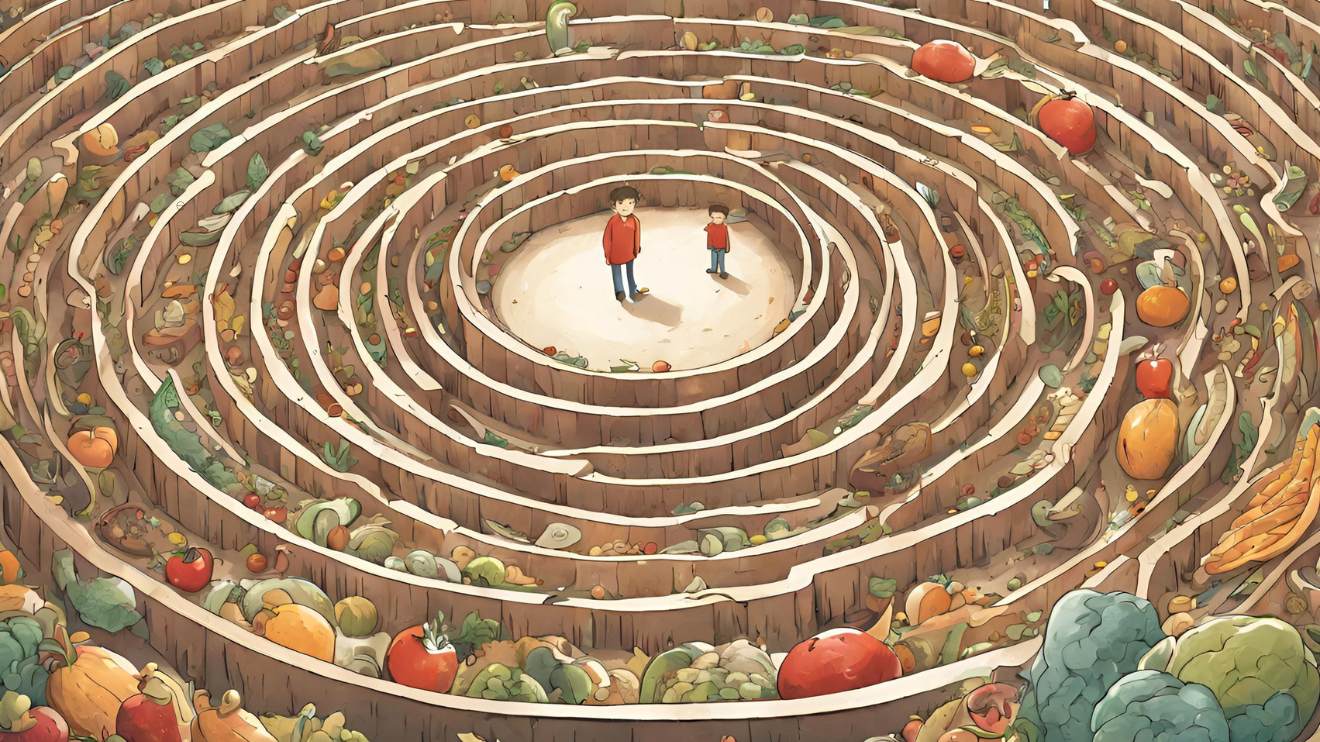
When I cook with my child, I suspect I am trying to mount a resistance against all these demons. Create a trail to freedom through the maze of unpleasure that has embossed itself on my family's history. Lest he grow up unable to understand the great dark vacuum that sometimes swallows his father's being, I want the waft of the food we cook together to keep us close.
Does this resonate with you? How do you protect the joy of food? What has helped you prevent guilt from curdling your relationship with food? Is food part of your parenting tool kit too? Write to me. Meanwhile, I hope you treat yourself to something nice today, guilt-free.