🎧What is conflict psychiatry?
And why is conflict a misunderstood word?

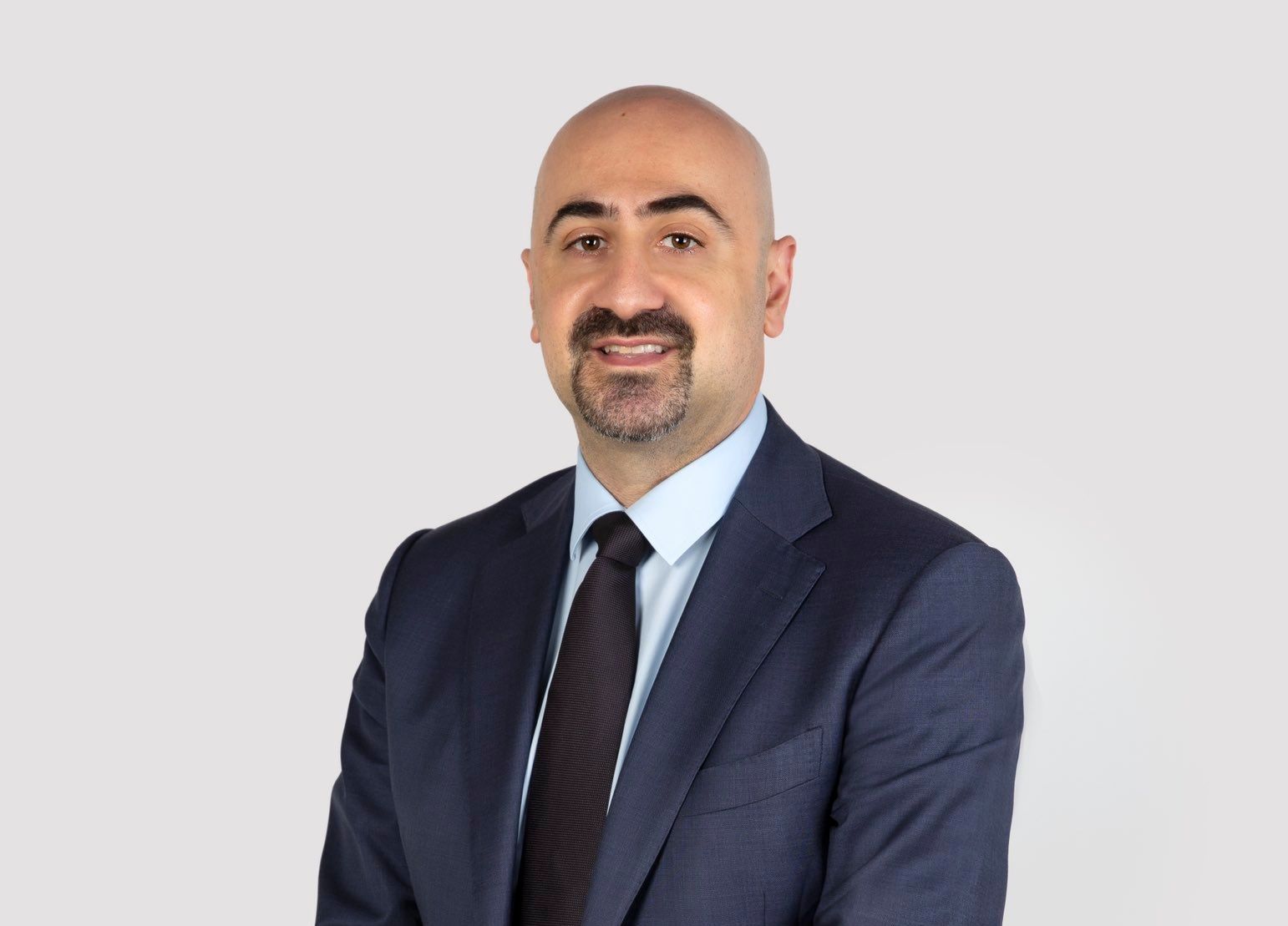
El-Khoury, who is a fellow of the Royal College of Psychiatrists in the UK, has powerful perspectives on the flawed assumptions people from the outside looking in tend to make about the words 'conflict' and 'war'. In this episode, he talks about the intriguing world of 'conflict psychiatry', the limitations of how we conventionally understand the idea of PTSD, and the possibility of hope.
Choose your support option [from India]
Choose your support option [from outside India]
Content warning
Nothing in this conversation is intended to be medical advice. If you live with any of the conditions described here, please seek professional help. References to trauma and potentially traumatising experiences. (PS: I am sorry about the slightly scratchy audio quality in this episode. I didn't mean to turn this conversation [originally recorded in 2021] into a podcast, but Joseph El-Khoury's insights were too rich to be a condensed into an article of a few hundred words. Please listen with headphones. Transcript follows.)
Full transcript (lightly edited for typos etc.)
World War One was a big turning point. You had all these damaged soldiers, you know, coming back home, they were not injured physically, but they could not fight, they could not go back to their families. And this is where military psychology starts to grow, to be invested in. And you can follow this all the way up to Vietnam.
And having worked with refugees on the Lebanese-Syrian border, at a time where the war in Syria was really heavy, you know, people were dying by the droves, that I would sit in a clinic and talk to a refugee and she wouldn't want to talk about the war, she would talk about her mother-in-law, you know, because suddenly, you know, she was living in a tent with an extended family. And that wasn't the case in her village.
And conflict is not just about war. It should be about, again, economic conflict. It should be about, you know, famine, it should be about ... to me Haiti is a conflict zone, although there is no open war. Venezuela is a conflict zone.
I think what we can do, and I think what I've seen a lot of people do, is to say the truth. A lot of what's happening in Afghanistan is not being validated by, for example, mainstream media.
This is Raw, audio stories by Sanity by Tanmoy, an independent platform dedicated to the politics, economics, and culture of mental health.
Today's story: Mental health and trauma in conflict and war zones, with psychiatrist Joseph El-Khoury.
Trigger warning: contains references to trauma and experiences that could be traumatising.
Tanmoy (T): Thank you, Joseph. Joseph El-Khoury is somebody that I have enormously enjoyed following on Twitter. And I have learned a lot about conflict medicine from his tweets, but generally his perspective about psychiatry is something that I found very exciting and enriching. Thank you, Joseph, for all the work you do, the wisdom you put out on Twitter. And thanks for connecting.
Joseph El-Khoury (J): Thank you Tanmoy. Again, you know, it was a pleasure finding out about you and your work. And I did actually do a bit of background search just to understand how you got to where you are. And I hope we're going to be able to, you know, discuss psychiatry in general and a bit about conflict medicine, conflict mental health, because that's kind of my field of interest at the moment.
T: Absolutely. Thank you, Joseph. Let's let's begin by sort of getting a little sense of your story. Conflict medicine is not something that I found attached to too many people's Twitter bios, and I'm very interested in understanding how you came to this field.
J: I mean, I am a psychiatrist, so I followed the regular training path, you know, going through medical school, then training in psychiatry. I am from Lebanon. That's where I grew up. And as you mentioned, you know, personal experience plays a very big role in what defines us. I was born in 1977. So I grew up in the Lebanese Civil War, which was 1975 to 1990, like the hardcore civil war, and Lebanon never really settled after that.
And in 2000, actually 1998, I travelled, I left Lebanon to go to medical school. And I did part of my medical school, actually, in the Caribbean, which is something a lot of people find interesting. Then I joined medical school in the UK, so I completed my medical school in the UK, and then I stayed in the UK for 12 years, finishing my training, then working as a consultant psychiatrist, and then I returned to Lebanon in 2012, to establish myself, work, teach, and do research. My last position for the last five years was at the American University of Beirut, which is one of the really good centres of excellence in the Middle East.
And then 2019-20 happens, Lebanon collapses under an economic crisis, political crisis, and I decided last September that I wouldn't be a victim of this, a passive victim of this, a bystander, and I moved to Dubai. I got a good offer. I'm head of the department in an excellent hospital, we started a new department, I brought my family here.
And so conflict has been part of my life, whether I choose it or not. And I decided to take control, I have a personal experience of [conflict] and I wanted to make the best of it, by joining psychiatry, my clinical work, and my own knowledge about it. In 2019 I graduated with an MSc in war and psychiatry from King's College London, which is one of the very few programmes that really properly combine mental health and conflict psychiatry. There are a lot of things on military and conflict, but not necessarily mental health and conflict. And that's roughly my interest and how I got to where I am at the moment.
T: That's very powerful, very instructive. And I must say, I'm tremendously encouraged by, you know, this community of psychiatrists that I find on social media, who are very open about talking about lived experience, you know, not pathologising everything, but trying to investigate sort of the human condition from the lenses of sort of life, really. And so thank you, thank you for a little bit of your story.
And I, I wondered for a second, whether we should start this conversation by you know, whether I should start the conversation by saying I wish it had happened at a happier time for the region, you know. We are all very disturbed by what's going on. And I have been trying to keep up with the news from Lebanon. And really, you know, I can only offer solidarity from afar about what is happening, it is difficult to comprehend really the scale of suffering.
My very sort of rudimentary research on the subject [of conflict medicine] tells me that it's defined as a small sub-specialty within medicine, that has grown, of course, out of conflict and war. How do you define it? What really is the scope of it? And why is it important for everybody to try and understand what conflict medicine is, whether or not they live in a conflict area?
J: Thank you for this question. I think, to go back to the background of, you know, the interest of mental health or psychiatry in conflict, we have to think of the military. Anything outside of, you know, traditional psychiatry, you know, the kind of western concept, DSM, ICD etc., does rely on what happens outside the walls of asylums, hospitals, or psychiatric clinics.
And the only perspective that has been real for the centre of powers is the military, because the military is basically sending men from environments that are structured, that are well developed most of the time, and sending them, throwing them in a conflict zone, and then assessing the situation and the impact. And we have to always remember that the military has brought to medicine a lot, because it's when humanity and its progress and science get tested. Because you have the means to test it. The money is never an issue when you're at war. And because people want to keep fighting. So you need your men to be fully operational. You don't want them to get infected, you don't want them to have psychiatric problems.
And this is why military medicine has been again a major contributor when it comes to, for example, infection control or surgery. Much of surgery was developed on battlefields, even in the Napoleonic Wars. Mental health came a bit later to the forefront and that happened probably around the early 1900s. And most of it was [by] the British, and later the Americans.
So World War One was a big turning point, you had all these damaged soldiers, you know, coming back home, they were not injured physically, but they could not fight, they could not go back to their families. And this is where military psychology starts to grow, to be invested in. And you can follow this all the way up to Vietnam.
Vietnam was a big turning point for the Americans specifically, and they started taking this thing seriously. And so we have PTSD coming to the fore. So that's the military.
When you combine global health, which is another discipline or another perspective, that has come probably again, you know, from the late 1970s onwards, and you combine military psychiatry, or military medicine, you end up with conflict medicine, because now we're not talking just about personnel, we're talking about how can we practice better and learn from the field? And we know, we know, I mean, I read again, what, you know, a lot of what you wrote about global mental health and other very eminent, you know, kind of professionals or people who talk about this issue: is global health really global? Is global mental health [really global?]. And is conflict medicine really global as well is the next question, or is it just kind of a byproduct of military medicine? And then we just basically kind of made it sound more politically correct.
And this is, I guess, the biggest challenge that I've on a personal level taken on, is to make it properly democratic. You know, I'm somebody who lived through conflict for most of my life. Am I entitled to research this from, you know, again, the perspective of someone who is not a soldier or even a doctor being sent by an NGO to practice medicine in Gaza? Is it something that is happening the right way? And this is, again, what pushed me to invest myself in this field specifically.
T: Yeah, you raised like a gamut of very important points there. And thank you for the history of military medicine and conflict medicine. It turns out that the military didn't just lead to the invention of the internet, then (laughs).
I was reading recently that there are now specific types of infections that have been traced back to war settings in particular. And that has been a big research focus, especially for Big Pharma, etc. And mental health, of course, we got the term 'shell shock' courtesy the First World War. And then like you said, PTSD...
Let me take a step back and ask you: you know, in mental health advocacy, or activism, we are constantly – sorry, I've to use this word – but we are constantly fighting another war, which is to try and communicate, you know, the biopsychosocial nature of human suffering. And what bigger crucible of that is there than war?
J: I mean, that's a great question. Because I think a lot needs to be written about the biopsychosocial model, generally.
I trained in England, sort of between 2000-2010 roughly, and biopsychosocial was a sacred word, you know, we didn't actually say anything without [adding] biopsychosocial. And to be fair to the English mental health system, probably, it's one of the systems that tried to kind of push it as much as possible to its kind of, you know, operational use. But it's created a lot of conflicts, it's created a lot of abuse even, of the system, of this word and the rest of it, and it created as you said, you know, this war. And I really, I am the kind of person who tries to kind of make it more of an integrated thing, as opposed to conflict. Because I was trained in therapy, I became a psychiatrist with this idea of Freudian psychiatry, you know, I, I thought I was gonna get like a big, massive, nice sofa, the patient would be there, I would uncover their [life]. But it almost seemed like we talked about two separate things like, you know, the psychiatry of understanding, of talk therapies, and then this kind of hardcore, you know, treat the bipolar, treat the schizophrenia. And these two are unrelated.
T: You're very brave, you're very brave to talk about Freud as a psychiatrist, I must say (laughs).
J: So I'm talking because again, these talks probably happen in doctors' messes, but they don't talk about it openly. And I work with psychologists, with psychiatrists, and, and for me, I feel we're not having the real debate. Okay, I just feel that we're shying away from having it. And the reason why I'm saying this is because when you talk about war, you talk about conflict, people assume that this is this is the psychiatry of causation, the psychiatry where there's a very good reason why somebody is depressed, when there's a very clear reason why somebody has trauma, as opposed to the biological formulation when you're sitting in a nice countryside in England, and suddenly you get depressed, you know? And are these the same thing?
As if if you were in a war situation, you could not biologically be inclined to be depressed. And it's simply because you're in more stressful situations. But the data doesn't show that. The data shows most people who were exposed even to very traumatic events, and very unusual situations, you know, don't necessarily develop mental disorders. It is, you know, obviously, it's a trigger, it's there, it is problematic. But then we need to look at the complexity of it, whether you're sitting in that English countryside, or you're in a, in a field in Syria, you know, and keep an open mind about both things.
Because I feel it's almost patronising to those who live war to just assume that because they are either traumatised or have lived this experience that everything else just stems out of this. And at the same time, it's unfair to say to the person sitting in that English countryside that, you know, you have everything you need, then clearly you have biological depression, clearly your problem is something that just came from your genes.
I feel the world is much more complex than that, because, again, I lived both things. And you will hear a lot of people who lived war who tell you that, well, you know, I felt more resilient and more, I felt that, you know, I was less depressed. Actually what depressed me was the economy, what depressed me was the fact that, you know, I couldn't establish relationships properly. So, much more mundane things.
And having worked with refugees on the Lebanese-Syrian border, it was 2012, at a time where the war in Syria was really heavy, you know, people were dying by the droves, that I would sit in a clinic and talk to a refugee and she wouldn't want to talk about the war, she would talk about her mother-in-law.
Because suddenly, you know, she was living in a tent with her extended family. And that wasn't the case in her village. And this was the issue now, not the fact that they had been bombed in this or this Syrian town. So I am always opting for accepting complexity, even in times of war, where things seem very obvious, but they're not. And they're very obvious because it is looked at by someone who has never lived in a traumatic context, in a mass traumatic context, such as a disaster or a war, or a pandemic.
Now with the pandemic, what's interesting about it is that it seems to have unified us, but has it really? Are we really all in the same boat, whether you're in India or in New York City, in the way it's being addressed? But at least there is that feeling that we can sometimes still be in a kind of mass trauma or mass stress event. People in the West are thinking more about this, they are thinking this could happen to us. It doesn't have to be happening in some African country.
T: Yeah, yeah. What I also take away from what you just said there is that actually, complexity is probably the recipe for hope. Because if you oversimplify these things, and if you always sort of cling to this belief that anyone who's lived through conflict is going to end up damaged, quote unquote, then there's just no room for hope. And I guess, you know, denying these easy formulaic approaches is one way perhaps to sort of continue to hope that you know, that there is something fundamentally resilient. Although I have my own problems with the word resilience, but in this context, I understand what you're talking about.
Tell me, why is PTSD not enough to understand what happens in long-term conflict? Because how we understand classical PTSD is exposure to conflict or trauma, and then you sort of, it's a temporal construct, you sort of come out of that, and then you sort of experience PTSD and there are classic symptoms etc. But is PTSD enough to understand what really happens to the human mind when you are exposed to conflict for like 30 years or 50 years?
J: Very interesting. Again, again, PTSD, let's look at the history. You know, the American military comes back from Vietnam, you have all these veterans that have been damaged, morally imbalanced, you know, some of them are struggling with substance use, heroin, alcohol. They need to be, you know, reintegrated into society, and a lot of them feel that you know, they don't feel well, and some of them do have symptoms that resemble what people experienced in World War II or World War I etc. And that had not been kind of necessarily then looked at from a scientific perspective, or categorised in a very kind of clean, neat, and useful perspective.
And we have to remember that in the US, a lot of reimbursement, a lot of diagnoses have to do with insurance companies, okay. So labelling has a function clinically, but it also has a function administratively. And PTSD actually came out of that, you know, they needed to find a word that exemplified a certain set of symptoms experienced by soldiers in that specific context. But then a lot of these symptoms had been experienced by other people before. People who had been exposed to assault. They have been living this but there was no PTSD to account for it. There were other words.
So PTSD came, and again, this is why the military always brings things that have been dragging along because there's a need, there's numbers, you get [what you need]. And then we started seeing [PTSD] in the civilian population, it had been present, now it's being diagnosed. And yes, you're right in saying it's not enough. Because war trauma, whether it's war trauma or personal trauma or any other trauma, comes in a context, comes on a background of people's mental make-up. And people don't experience these symptoms classically very often. So the classical response that I've seen in clinic and I, you know, I've treated people with PTSD, and people who have been veterans or people are exposed to other kinds of trauma, sometimes you see it, and when you see it, it's almost this aha moment, we go like, Oh my God, there it is. It's the avoidance, it's the flashbacks, the nightmares. But a lot of the time you see something else. And in other patients, you see just the constellation of things where you can almost decipher some of these symptoms.
And that's why PTSD has been criticised as not being fit for purpose beyond the context of a very specific population, and a very specific culture and a very specific context. And a lot of people have argued against it. And, and yes, I can see the reason why, but at the same time, we should not completely dismiss the concept. I think what we need is to look at PTSD as an umbrella term. And there is a direction for that.
For example, 20 years ago, you would not be diagnosed with PTSD had you not been on the scene of a certain event. Now, you can just by having been exposed to the story or the event. We're not worried about somebody being close to the event. And yes, these are real cases, you know, we do see people who, for example, you know, made a phone call to certain area, let's say, take Kabul now. You know, you don't know where a certain cousin is, and you make a phone call, the person is not responding, you hear news that somebody in that same area is dead, you get the sense that you've lost that person. That is enough, actually, to cause PTSD, if the right conditions are met. And I think that's a more humane way of understanding PTSD.
But even putting PTSD aside, depression, personality changes, anxiety, insomnia, all these things can appear by themselves following a certain traumatic event, or a traumatic experience that's been relived again and again – such as the refugee experience, because the refugee experience does not end when you exit the conflict zone. It doesn't even end after you've been given asylum, because you'll be probably stigmatised the rest of your life. So, you know, you're not going to see a steady PTSD in the classical 'my house got bombed' sense, and now I can recall that particular night when my house got bombed. But that's what, you know, sometimes lawyers look at, and definitely that's what insurance companies look at.
T: Yeah. Yeah. It's very interesting that you brought up the insurance perspective. I have been sort of haranguing my therapist, trying to wrangle out a diagnosis from her, because I felt that my symptoms are morphing. And I have this doubt, do I have BPD? And I have been trying, and I don't personally, I've never really felt the need for any kind of diagnosis. Because in India we don't have insurance, we now do have insurance for inpatient care, but it's not like I can get my therapist's fees reimbursed.
So anyway, I, when I was researching, I read this piece by a critical psychiatrist, well, maybe actually even an anti-psychiatrist. And what he said was essentially this: that a lot of the times, when patients walk up to him and ask him for a diagnosis, he just writes PTSD on every prescription, you know, that's a standard diagnosis for everybody. He says, If I have to diagnose you with something, because human beings will invariably go through trauma, I don't have a moral problem with saying PTSD. And I found that really, really interesting.
But on the subject of trauma: I just want to sort of go back to the language issue. And recently, you know, there's this pushback from certain sections, even within the mental health profession, saying why are people using this word trauma so indiscriminately? As somebody who's sort of bona fide really worked with people who are affected by severe trauma, how do you see this? Do you see such words as the exclusive preserve of people who understand how to use them properly? I just wanted to hear from you how you feel about this.
J: Again, again, definitions, you know, get torn apart and shifted. And if we think of trauma as something that human beings should not be experiencing – so the exception rather than the rule – that's one thing. If you're seeing trauma as something that's invariably going to happen to human beings, then you're talking about two things that are very different. And this is why stress and trauma really have been split, although post traumatic stress is, you know, it's interesting because it merges the two words.
If you take, for example, my personal experience, okay, and you tell my story to somebody who grew up in a very stable environment, free of war. And interestingly, again, I was talking to a friend the other day that when I look at my childhood, which was still privileged, protected to a certain extent despite living in a war zone, and I compare it to the childhood of somebody who grew up, let's say, in France at the same time, you'd find trauma, you'd invariably find trauma, you know, having to kind of, you know, be in a shelter, hearing of an ex dying, my uncle getting kidnapped, you know, all these things don't happen to regular kids in regular places. But I don't necessarily perceive it as trauma, because I was in an environment where everybody was living it. And then finding the threshold, at what point it becomes unusual, is an issue.
So I think we need to either broaden the use of trauma and then say, fine, you know, anything that happens, even within 'normality' is to be [called trauma]. And if you want to find another word for things that we don't expect people to, to experience, then we need to find different words.
The problem is, and let's go back to conflict medicine, what percentage of the world is living under the conditions of stability? Conflict should not be just about war, it should be about, again, economic conflict, it should be about, you know, famine. To me Haiti is a conflict zone, although there is no open war there. Venezuela is a conflict zone. Probably I would say, half of countries in Africa are a conflict zone.
So actually, most of humanity is living in a conflict zone, so to just give a different kind of threshold to people growing up there has ethical and moral, you know, implications that we need to look at very, very openly. I mean, should we have a psychiatry for these people that's different from the psychiatry for the western world? And if we do, then, you know, where does that leave us? I don't think there should be. I think everybody should be trained to be able to deal with things and understand that the norm is not what happens only in the settled, economically developed environment, the norm of mental health should be the norm for everywhere. And that's where global mental health again, the debate is, is faltering.
You know, if you if you send a paper for publication, and this paper is done in Uganda, okay, and it's a very simple paper on depression, it becomes a cultural paper. If the same paper says major depressive disorder in Seattle, you don't need to mention Seattle, it's just [seen as a paper on] major depressive disorder. Until we get rid of this, trauma is always going to mean different things for different people. And again, it means different things for different professions, a psycho analyst, a CBT psychologist, trauma is going to mean different things to them. But I think this dialogue is not happening properly. I don't think it is. At least I'm not aware of it.
So it's almost like should we have poverty psychiatry? I mean, should we have psychiatry for the poor because obviously, that's a stressor that's experienced by certain, you know, by a certain part of the population, and psychiatrists are not trained to look at the impact of poverty. We think of it as kind of superficial you know, poverty I mean, economic stress and the rest of it.
So either we have a psychiatry that's flexible enough to be able to understand and integrate all these types of of exposures and problems and find solutions for them. Or we say there is a psychiatry that is just basically for a certain type of people, certain countries, everything else is either exotic or needs to be explored from the perspective of the 'other'.
The problem I have with that, because I've lived in these two different settings, you know, I could have easily continued my life and my career in England being, you know, a consultant psychiatrist in England, looking after, you know, people in the UK. And again, you know, the UK is a very complex country, you know, there's a lot of poverty, there's a lot of conflict as well. But it's a system, you know, that's in place. And there's research going towards helping the system to cope and fit into the bigger picture.
When you go and practice in other countries, whether, you know, and I have lots of colleagues who went back to practice in India, for example, and some of them found their feet, other work in the private sector, but we are not trained. Most of the psychiatrists, and psychologists are trained in a Western model, and a lot of them in western countries. So are we trained and equipped to practice psychiatry broadly? Or do I just go and say, fine, you know, I'm just going to take 50% of my training, and I'm going to work in this country with this problem. I feel we should be trained to be psychiatrists everywhere. And that means dropping our prejudice around, you know, what kind of psychiatry we're practising.
T: So yeah, so I think we can we can talk about psychiatry for hours. But I'm mindful I have taken a lot of your time. I have two more questions, coming back to conflict medicine. One is, yeah, you started by asking whether the global mental health movement and in general, the global public health movement, has done enough to capture the complexity of worldwide conflict. And I almost know the answer, but I want to hear it from you.
J: Well, I mean, again, global mental health, I always like to put it in comparison to cultural psychiatry. When I started training in psychiatry, we used to, for our exams, we had all these weird cultural syndromes. So India had one, South America had one, and we loved them, because they were like easy to remember for exams. And again, it's like, this is what happens in other cultures. But depression is actually the depression of a European person, again, dressed in a certain way.
And again, I'm saying this as not to blame anyone, but this reality just hits you. And so cultural psychiatry was obviously very clearly one sided, very ethnocentric. I think global mental health has moved the conversation in a very healthy direction. The problem is that the actors have not changed. So we need diversity in the actors. And I know a lot is happening around this, but it's still very, very nascent.
We actually just auhored this paper that's still in revision at the moment. And when we looked at the number of authors from LMIC (low- and middle-income) countries who have been published in the top 30 psychiatric journals, and the numbers are shameful. Just completely shameful, including on topics to do with global mental health, including on topics to do with LMIC countries.
T: Not surprising at all.
J: My view, the way I think of things, I don't expect people to give me a free ride. I think it's for people in LMICs to work together to build capacity, to join forces, to shift the discussion, not only theoretically but practically, so that we are actually, you know, not objects of the conversation, but actually the authors of the conversation, because it is our conversation.
T: Again, point very well taken about need to form our own alliances and to form our own communities because we don't have to be beholden to the power structures that exist. Of course, because of the disproportionate share of power that they enjoy, it's very difficult to suddenly start a whole different movement that is by the people, of the people, for the people in LMICs, because we still have to publish papers in those journals which have massive circulation, reach, etc. But yes, I hear you.
And since we are talking about lived experience, I hear the problem of data collection from conflict settings can be can be quite a major nightmare. And I guess the importance of listening to people's lived experience when qualitative research becomes even more important. Talk to me a little bit about that.
J: Very interesting. I mean, again, qualitative research was looked down upon until recently, especially in the medical profession, probably less with the psychologists. There is a renewed interest in it now. I'll give you just a very simple example, which is the one with psychosis. I mean, psychosis is, is a very dramatic, florid presentation.
T: You've done a lot of work in Lebanon on psychosis.
J: Yes. And there's a very recent paper from Belgium, where they started looking at the experience of psychotic patients – the content of what they're feeling as opposed to just ticking the box for symptom A symptom or symptom B, because that for about 20-30 years was completely put on the side.
It's easier to do qualitative research in the sense of finding the subjects, but it's more complex in terms of making it useful, relevant, and citable
T: Replicable.
J: So we did actually two studies now, one of them looks at the experience of former veterans, like former military soldiers, 30 years after the end of the war, and it was very interesting that these older men now are telling us their stories. It's a piece that can be used for other research.
We did another research that's now in review, which is looking at the experience, the decision-making process of Muslim patients in Ramadan, whether they decide to fast or not, and why would they decide to fast. Because no one's really explored this, and you have millions of people in the world who, before Ramadan, have to decide, am I sick enough as per the religious book to fast, because I take medication, or not. So we looked at how do they decide, you know, do they talk to a doctor? Does the religion of the doctor matter? Do they talk to their religious leader, their families? And we found some interesting results, you know, and again, it's now under review. So hopefully, I can share more with you at a later stage. So this is qualitative research on 15-20 individuals that opens a discussion around very humane topics. And let's not forget, mental health is about human beings, you know.
T: Yeah basically that sort of data gathering and complex laboratory experiments, they presuppose the existence of an infrastructure that is simply not present in very large parts of the world, especially in conflict zones, and so are you going to just forever deny them the reality of what they feel simply because there's no data, because data cannot be collected, and just not never listen to their stories? So I find that very powerful.
J: What you said, without resources, building proper capacity for people to become researchers, to be working in these countries, and to train other people, not to just you know, take, you know, a Lebanese doctor, send them to the US and then he stays there – that's not capacity building. You need to, you know, support people in their own environment for them to stay there, train next generations, and build capacity. You know, Harvard did not become Harvard overnight. At one point it must have been some place in the middle of nowhere. It's just that [resources were] put in the right places. Conflict does not mean that there is no money, it just means that money is going in the wrong direction.
T: Yeah, that's a handy reminder, I think something that we tend to forget. I think we generally equate conflict with poverty.
I have to ask you this given, given the times that we're living through, I have been getting questions from friends saying what can we do to support whatever is happening in Afghanistan, in Lebanon, in Haiti? And I honestly don't know what we can do. What can we do? There's so much conflict all around us. Both people in the mental health ecosystem and otherwise, what should our role be?
J: I mean, it's, again, a very, very difficult answer to give. Just to, you know, again, talk about from my perspective, I think it's important that no matter what you've been through, you never just narrow it down to that particular angle or experience. Okay.
So even in Afghanistan, people leaving Afghanistan now on one of these horrendous flights and ending up in let's say, New Delhi, okay. Probably they want to talk about Afghanistan, about their experience, but also want to be treated as individuals with individual needs, okay? And that tends to be forgotten. So if I can't talk to you about Afghanistan, I can't talk to you about anything else.
You know, a lot of these people will probably have aspirations, dreams, plans, and some of them might want to leave Afghanistan behind completely and start a new life, and no one should feel that this is something that is a sort of betrayal or the rest of it.
I think what we can do, and I think what I've seen a lot of people do, is to say the truth. A lot of what's happening in Afghanistan is not being validated by, for example, mainstream media. So saying the truth, talking about people whose stories are not coming out, sharing things on Twitter, talking about these things is, is providing, again, tools for recovery. Because a lot of the time we need our story to be validated, we need to know the truth, and that by itself allows us to kind of find our own feet. So not to just narrow an individual just to that one thing.
Somebody now could be joking, putting up a picture of a cat, but still at the same time be suffering, and that should be fine. And at the same time, we as external people should be as much as possible seeking the truth and looking for the truth and not accepting just this kind of very well-packaged stories and perspectives because that's what we're being fed, you know, and it's frustrating not to get to the bottom of things. I mean, by nature, I like to get to the bottom of things, and I like to find the niche story that provides you the bigger picture and I think people like you are doing that, other people with mental health lived experience as well, because there will be some, again parallels between what these people are living and what you lived through. And it's possible that your experience was worse, because there wasn't that mass, you know, upheaval around it, and you have to live it in a very kind of lonely place. But there will still be all these stories, you know.
Let's not forget: somebody living in Afghanistan now was planning to get married in six months, had probably rented a new apartment, and now all this. So it's not just about a country falling apart. It's about people.